
Volunteer Briefing
Merkado
Olive Retreat 2026
Welcome Merkado Olive Retreat - you are now part of a team who is going to make world quality extra virgin olive oil
What is it that makes our oil so unique?
We prioritize quality over quantity: Unlike mass-produced oils, our process focuses on preserving the natural integrity, vibrant flavor, and health benefits of the fruit.
We practice careful harvesting: We avoid standard plastic bags, which suffocate the olives and cause rapid fermentation. Instead, we use ventilated containers to keep the fruit cool, fresh, and pristine from the branch to the press.
Every step is intentional: From separating ground-fall fruit to milling within a strict 24-to-48-hour window, we craft a premium oil that truly reflects the care put into the land.
Volunteer Timeline
Olive Harvest & Milling
Stage 1: Tree Preparation
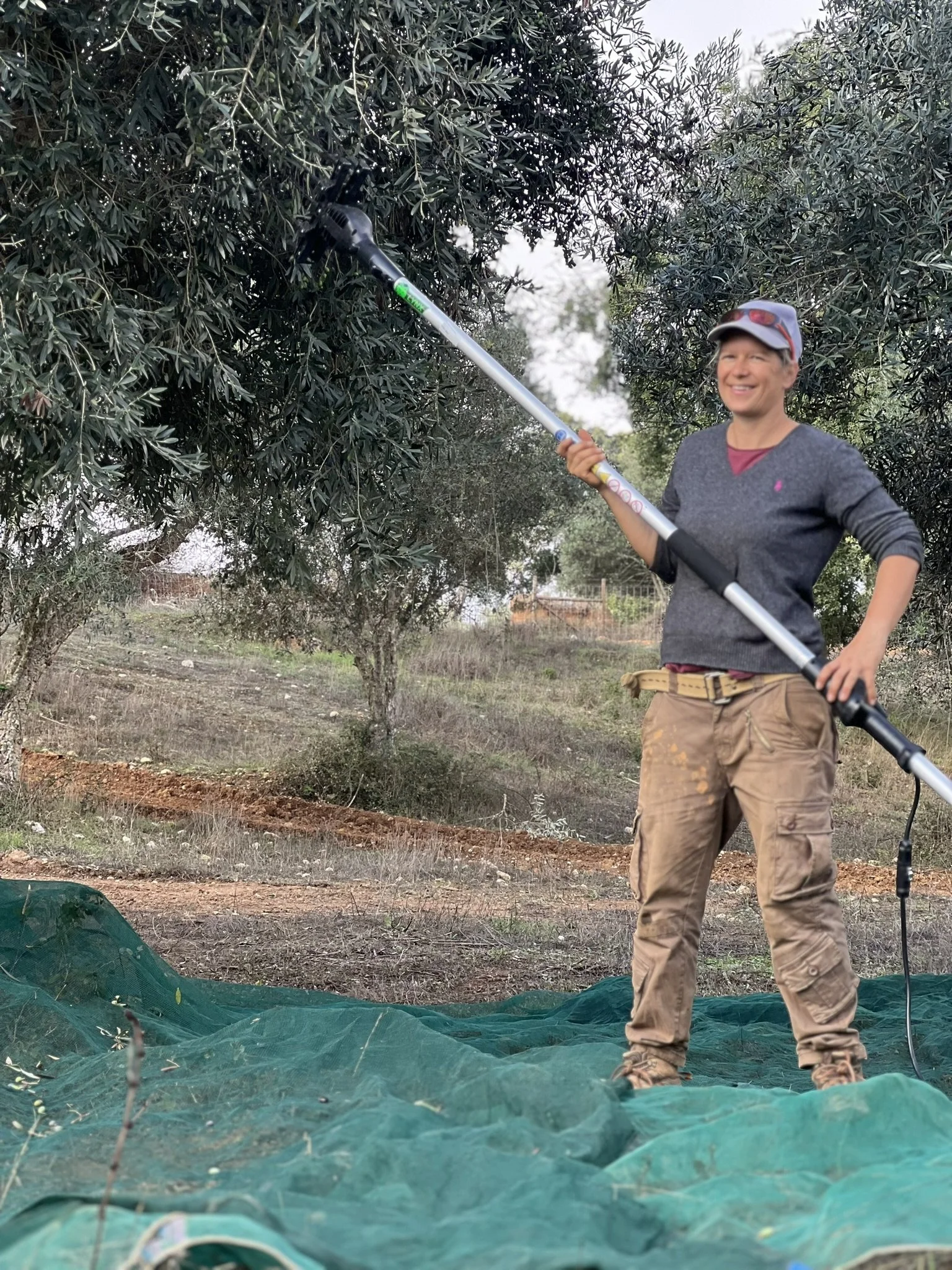
Lay the nets: Spread the green net completely around the base of the target tree.
Pruning review: Inspect the tree to determine which branches need to be pruned before picking begins.
Stage 2: Picking the Tree
Log the details: Record the tree number and olive variety on the log sheet.
Manual picking: Once Sue cuts the designated branches, pick them manually using the orange olive combs.
Let the olives fall onto the net.
Toss the cleared branches outside the net for the sheep to eat.
Mechanical shaking: Use the gasoline-powered shakers to clear the remaining fruit.
Team rotation: The shakers are heavy; rotate users regularly and take breaks throughout the day.
Technique: Work gently from the top of the branch downward to keep olives from flying outside the net. Avoid pushing too deep into the branches to prevent breaking the machine's small fingers.
Internal tree picking: Once the ground-level work is finished, one person climbs into the tree. Carefully pass the shaker up to them so they can harvest the inner branches.
Stage 3: Collecting the Olives
Protect the fruit: Do not step on the olives. Wear soft footwear like trainers rather than heavy boots.
Consolidate: Fold the sides of the net inward to gather the olives into central piles.
Clear debris: Remove large branches by hand.
Transfer: Lift the net and pour the olives into the black bins. Load the bins onto the trailer for immediate transport to the mill.
Stage 4: Leaf Blowing & Debris Removal
First round (Leaf removal): Empty the bins into Haim’s green leaf blower with the grid attached. This separates the olives from small branches and blows away the leaves (save these leaves for the sheep). Hand-pick out any loose wood or stones.
Second round (Foreign objects): Inspect the olives closely for stones, plastic, or loose screws that may have vibrated off the shaker. Crucial: These must be removed completely to avoid catastrophic damage to the milling machine.
Stage 5: Bagging & Weighing
Bagging: Pour the olives into the funnel of Haim's custom bagging machine to bag them up.
Tagging & Logging: Note the unique number on the bag, weigh it, and immediately record the weight on the tracking sheet.
Stage 6: Cleaning & Cooling (The Olive Bath)
Washing: Under Haim’s guidance, transfer the bag into the olive bath to clean the fruit and remove any worms.
Temperature control: Check and log the water temperature and total soak duration. Keeping the water cool is vital to preserve the antioxidants in the oil.
Stage 7: Feeding the Machine
Load the hopper: When instructed by Haim (Master Miller), empty the bag into the top of the machine.
Safety & Care: Hold the bag strings tightly away from the machine to prevent them from getting caught.
Final check: Watch the olives feed down into the hopper; keep your fingers safe while plucking out any last-minute stems or wood pieces.
Stage 8: Pomace Managing (Waste Product)
Monitor the waste: As the olives are crushed, the waste pulp (pomace) exits into a large bag at the back of the mill.
Replace when full: Monitor the bag level closely so it does not overflow. When full, use the digger to remove it and put a fresh bag in place.
Stage 9: Malaxation (Mixing)
Monitor capacity: The olives pass into the malaxer for mixing. Keep an eye on the inspection window; if the olives at the top stop dropping down, the malaxer is full.
Strict temperature check: Double and triple-check the temperature. It must never exceed 27°C to maintain its official "Cold-Pressed Extra Virgin" classification.
Stage 10: Decanting & Storage
Extraction: The oil transfers through the blue pipe into the decanter and trickles into the stainless steel collection bucket.
Immediate swap: Swap out the bucket the moment it fills.
Storage: Transport full buckets immediately to the Mercado Olive Shop and transfer the oil into the Inox stainless steel containers to protect it from oxidation. If we are milling for others, then it goes straight into their containers or the standard 5 litre ones that we have in stock.
Stage 11: Post-Milling Cleanup
Machine cleaning: Empty and clean the water bath so it is ready for the next batch. Clean all remaining pulp out of the malaxer, and wipe down any leftover oil residue in the decanter.
Facility cleanup: Sweep and mop the floors. Wipe down all worktops, clean the tools, and return them to their proper places.
Break room & Supplies: Wash any used coffee cups or glasses. Clean the storage boxes and hang the olive bags back on their designated hooks.
Pressing for the community
So when we press for the community then we would help with the preparation work to ensure everything runs smoothly.
Our Olive Oil is tested independently
Here is what the results actually mean