We believe in excellence and providing inspiration to others to do the same.


Trusting the Human Eye Over the Machine

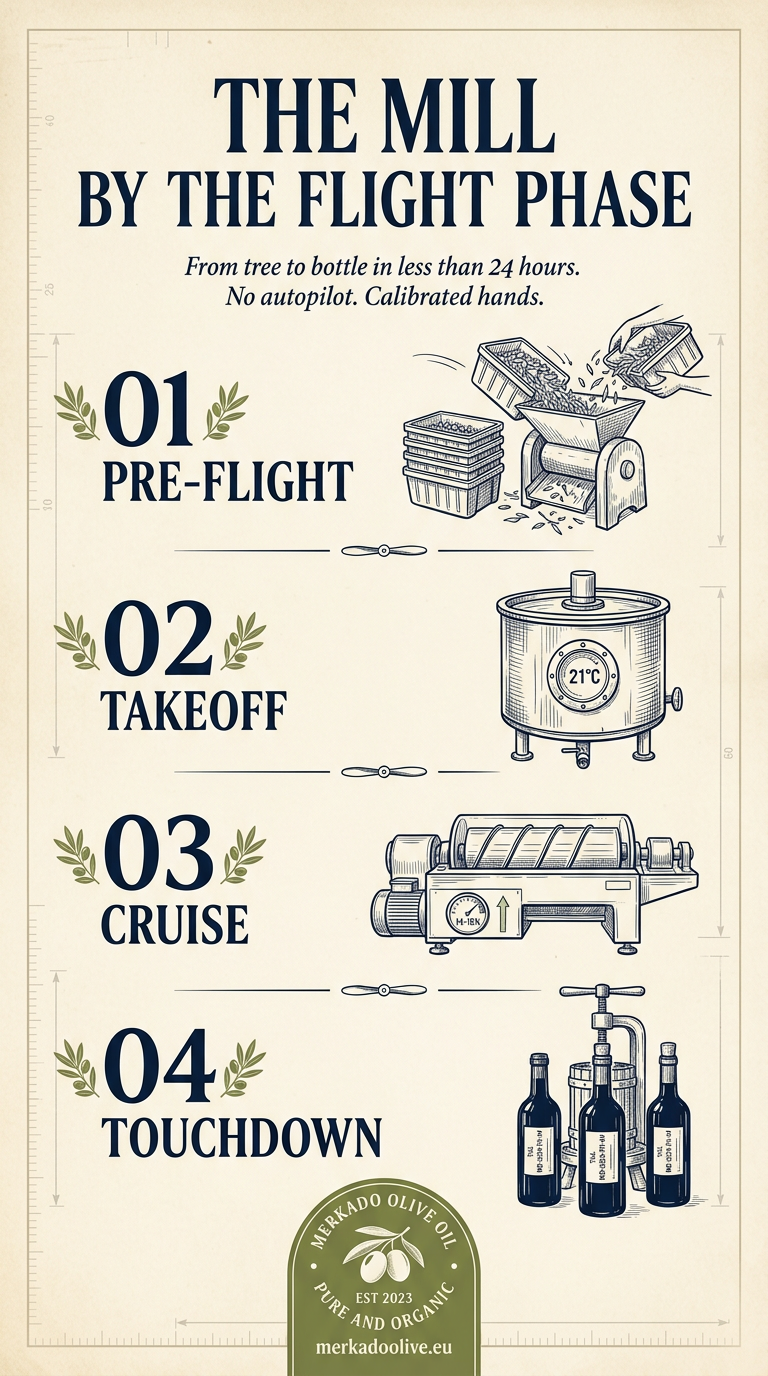
The paste then enters the Malexer, a machine designed to slowly churn the mixture, breaking down oil emulsions so tiny droplets can find one another and merge. The walls of our Malexer feature water jackets regulated by digital sensors and heating elements.

But aviation protocol dictates that automation cannot replace human vigilance.

We do not blindly trust digital screens. Our miller constantly verifies the environment using two manually calibrated independent temperature gauges. By adjusting hot or cold water flows into the jacket walls, he commands the temperature with absolute precision.

Between 20 and 45 minutes of churning, magic happens. Shimmering puddles of vibrant green oil appear on the surface of the paste.


The Separation of Gold

When the visual indicators and temperatures align perfectly, the miller activates our twin centrifuge system.

It is an industrial ballet of speed and physics. The primary centrifuge spins at a blistering 3,000 RPM, while the smaller internal feeder spins at 3,300 RPM. Acting like an extreme washing machine, the heavy solids and natural vegetative waters are forced outward against the walls.

Suspended perfectly in the center of this spinning mass is the pure, untamed extra virgin olive oil. It exits the centrifuge through two carefully calibrated orifices, flowing directly into protective containers before being moved into climate-controlled storage.

The Milling Process

The mill is managed by Haim who has with an extensive background in aviation and quality control. In our mill, flight-safety discipline meets agricultural tradition:

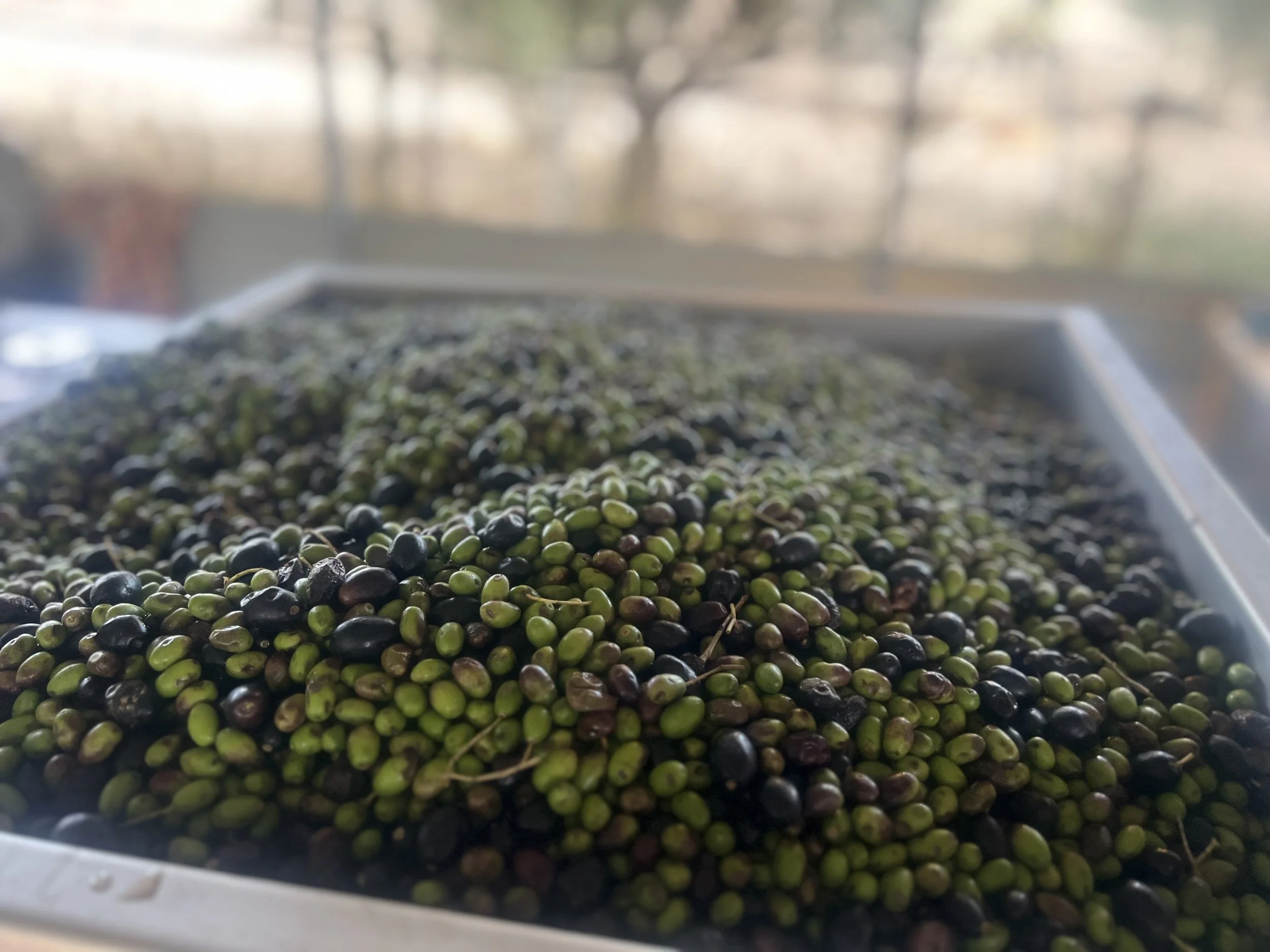
  • The Purification: Olives undergo an initial leaf-blowing phase, followed by a meticulous sorting sequence to remove non-olive objects of identical weight.

  • The Cleansing Registry: Cleaned olives are placed into specialized fishnet bags, given a unique ID tracking number, weighed, and logged.

  • The 23°C Hydration: The bags are submerged for exactly 20 minutes in a flowing 23°C water bath. This precise window forces hidden orchard pests to evacuate the fruit and sink to the bottom. We flush this water up to twice a day, removing cups of impurities from every 500 kg batch.

  • The Controlled Crash: The immaculate olives enter the crusher, transforming into a rich paste. The mechanical friction naturally raises the paste temperature to 25°C.

What Makes our Oil Different

Tree to Table 4 hour Processing

"Tree to Table" in 4 hours is the gold standard for olive oil quality.

Speed is everything because once an olive is picked, it begins to oxidize; the faster it’s pressed, the lower the acidity and the fresher the flavor.

Engineered for perfection

Our precision milling process is a race against time, ensuring every olive is transformed from tree to table within four hours.

By utilizing climate-controlled, low-impact machinery, we maintain a strict 'cold-press' threshold of under 27°C. This meticulous approach prevents oxidation, preserves delicate polyphenols, and results in an ultra-low acidity oil with a vibrant, peppery finish.

Benefits from early harvesting

Polyphenols are powerful antioxidants that give high-quality oil its "peppery" kick at the back of the throat. Early-harvest olives are packed with these compounds, which help:

  • Fight Inflammation: Oleocanthal, a specific polyphenol, acts similarly to low-dose ibuprofen.

  • Protect the Heart: They help prevent the oxidation of LDL (bad) cholesterol, keeping arteries clear.


Join the Olive Picking Team

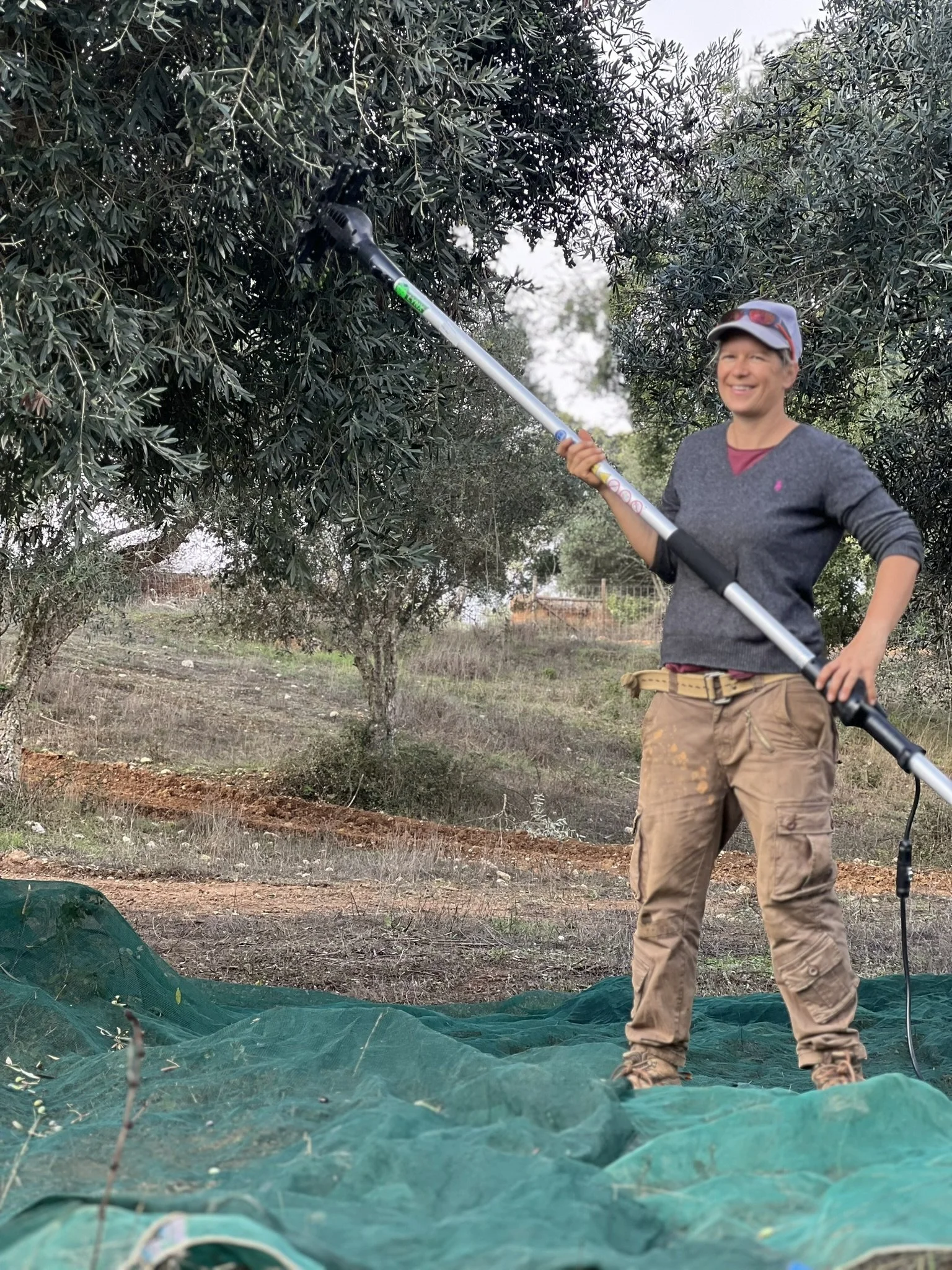
Our olive harvesting season is approaching! We take an organized, tree-friendly approach using modern machinery that allows the fruit to fall naturally without causing damage.

We are currently welcoming members and volunteers to join our harvesting teams. If you’d like to be involved, please get in touch before October so we can finalize our teams for the season.